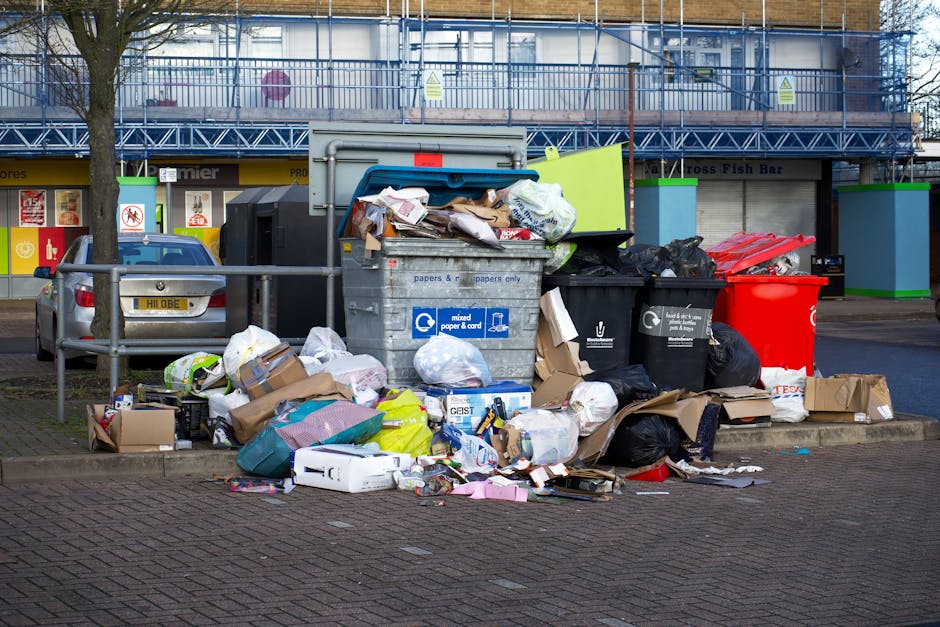
Harlow Council rules for bulky rubbish collection explained
If you have an old sofa, mattress, broken wardrobe or a pile of worn-out household items sitting in the hallway, bulky waste can quickly become one of those jobs you keep putting off. And fair enough - it is not always obvious what the council will take, what needs booking, or what counts as a bulky item in the first place. This guide to Harlow Council rules for bulky rubbish collection explained breaks the process down in plain English so you can make the right call, avoid delays, and choose the most sensible disposal route for your situation.
In practice, bulky rubbish collection is about getting large household items removed safely and legally, without turning your driveway into a half-finished clear-out scene that hangs around for days. Below, you will find how the process usually works, what to check before you book, how to prepare items, and when an alternative like professional waste removal may be the better fit.
One quick note before we dive in: council collection rules can change, and the exact terms often depend on the item type, access, property layout, and appointment availability. So use this as a practical guide, then double-check the latest local instructions before you set anything out on the pavement.
Contents
- Why the rules matter
- How the collection process works
- Key benefits and practical advantages
- Who this is for and when it makes sense
- Step-by-step guidance
- Expert tips for better results
- Common mistakes to avoid
- Tools, resources and recommendations
- Law, compliance, standards and best practice
- Options, methods and comparison
- Case study or real-world example
- Practical checklist
- Conclusion
- Frequently asked questions
Why Harlow Council rules for bulky rubbish collection explained Matters
Bulky waste is not the same as your normal weekly bin. Councils treat it differently because large items can be awkward to handle, potentially hazardous, and expensive to dispose of if they are mixed with the wrong materials. A sofa with a metal frame, a broken fridge, or a carpet soaked from a leak all need a bit more thought than a garden bag of leaves.
Understanding the rules matters for three simple reasons. First, it saves time. If you book the wrong collection or leave items out in the wrong format, you may be told to rebook or remove them yourself. Second, it helps keep everyone safe. Heavy items placed badly can obstruct pavements, create trip risks, or become a problem for collection crews. Third, it helps you avoid unnecessary costs and stress, especially if you are working to a move-out date, a landlord deadline, or a house clearance schedule that is already tight.
There is also a bigger picture. Councils and licensed waste operators have to manage items responsibly, and that means separating reusable, recyclable, and non-recyclable materials where possible. If you have ever stood in a room full of old furniture and thought, "Right, where on earth does this all go?" - well, that is exactly why a clear process helps.
Practical takeaway: treat bulky waste as a planned job, not a last-minute bin day extra. A little preparation goes a long way.
If your items are part of a larger clear-out, it can also help to look at related services such as house clearance, furniture disposal, or mattress and sofa disposal so you can match the disposal method to the actual load.
How Harlow Council rules for bulky rubbish collection explained Works
Although the exact booking rules may vary, bulky rubbish collections generally follow a familiar pattern. You identify the item, check whether it is accepted, book a collection if required, and prepare the items for safe removal. Simple enough in theory. In real life, the detail is where people trip up.
Usually, councils want bulky items presented in a way that makes collection safe and efficient. That might mean placing them at the boundary of your property or another agreed collection point rather than in a communal hallway or behind locked gates. If you live in a flat, the collection point can matter more than you think. Narrow stairs, shared entrances, and parking restrictions can make an easy-looking job suddenly awkward. For homes with limited access, a service like flat clearance can be a more practical route.
Another common point is item condition. Furniture that is dry, clean, and separable is generally easier to handle than items stuffed with mixed materials or contamination. For example, a dismantled wardrobe is easier than a fully built one with missing screws, loose glass, and an attached mirror that nobody noticed until the last second. Yes, people do that. More often than you would think.
Bulky waste can also include a mix of items: chairs, tables, beds, wardrobes, drawers, shelving, appliances, and garden furniture. But not every item is suitable for the same collection. Some items may be restricted because of weight, safety concerns, electrical components, or hazardous content. If you are unsure, services such as fridge and appliance removal and hazardous waste disposal are often more appropriate than trying to treat everything as standard bulky rubbish.
In plain terms, the process works best when you think ahead: what is the item, what material is it made from, how will it be moved, and who is responsible for the collection? Once those pieces are clear, the rest becomes much easier.
Key Benefits and Practical Advantages
Using the council route for bulky rubbish can be a sensible choice, especially if you only have one or two items and you are comfortable waiting for an available slot. It is often straightforward, and for residents who want a simple disposal solution, that can be enough.
Here are the main advantages in practical terms:
- Clearer structure: you know what is expected, where to place items, and whether booking is needed.
- Safer handling: bulky items are removed through a process designed to reduce lifting risks and street clutter.
- Potentially lower cost: for small quantities, a council collection can be more economical than a full private clearance.
- Less guesswork: if accepted, the council route can be a tidy answer for one-off disposal.
- Environmental control: items are more likely to be routed through recycling and disposal systems rather than dumped informally.
That said, the "best" option is not always the cheapest. If you have stairs, limited parking, several large items, or a deadline looming, the real advantage may be speed and convenience rather than price. A late afternoon collection can save a whole weekend of dragging a sofa through a tight corridor while your neighbour's door keeps opening at the worst possible moment. Everyone's been there, or close enough.
Commercial clearance options can also be useful when you have more than just one bulky item. For larger mixed loads, a broader service such as waste removal or furniture clearance may fit better than a single-item council pickup.
Who This Is For and When It Makes Sense
This topic matters most if you are a homeowner, tenant, landlord, letting agent, or small business owner dealing with large unwanted items. The situations are familiar enough: a tenant has left behind a broken bed frame, you have replaced a bulky sofa, the loft is full of old furniture, or the garage has become a storage unit for "things that might come in handy one day". Spoiler: they rarely do.
Council bulky rubbish collection may make sense when:
- you only have a small number of items;
- the items are standard household bulky waste;
- you can wait for an available collection date;
- the collection point is easy to access;
- you want a simple local disposal option.
It may make less sense when:
- you need a same-day or rapid turnaround;
- you have multiple rooms' worth of items;
- the property has difficult access, narrow stairs, or no lift;
- the load includes restricted or hazardous items;
- you need help from inside the property rather than at the kerb.
For example, if you are clearing a one-bedroom flat after a move, a council collection might work fine for a mattress and a chair. But if you are emptying a whole lounge, a bedroom, and a storage cupboard full of odds and ends, a more comprehensive service is usually less stressful. In that case, options like home clearance or loft clearance can be far more efficient.
Step-by-Step Guidance
If you want to avoid the usual hiccups, take the process one step at a time. No drama, just a bit of order.
- Identify every item you want removed. Write down each bulky object, including whether it is broken, dismantled, or mixed with other materials.
- Check whether the item is accepted. Some things are fine as bulky waste, while others need specialist handling. Appliances, mattresses, and certain materials may be treated differently.
- Separate anything that should not travel with the main item. Remove batteries, glass shelves, loose contents, personal papers, and sharp parts where possible.
- Measure access points. Doorways, stair turns, lifts, and parking access all affect how easily the job can be done.
- Decide on the collection route. Council collection for a small straightforward load; private clearance for larger, faster, or more complex jobs.
- Book and confirm the details. Make sure you understand the collection point, the time window, and any presentation rules.
- Place items correctly. Put them where they are meant to be collected from, not halfway down the hallway or tucked behind bins.
- Keep a quick record. A simple note or photo can help if there is any confusion about what was collected.
A useful real-world tip: do the prep the day before, not the morning of the collection. Things always take longer than expected. The missing wheel, the stuck drawer, the rusted screw - they all appear at the worst possible time.
If you are unsure whether an item can go with normal furniture waste, check the specific guidance for what can go in a skip, because that kind of item-by-item clarity can prevent a lot of mistakes even when you are not actually using a skip.
Expert Tips for Better Results
In our experience, the smoothest bulky waste jobs usually come down to planning, access, and separating the right materials in advance. Nothing glamorous. Just the stuff that saves time.
1. Break down furniture where it is safe to do so. Flat-pack items, bed frames, and shelving often become much easier to move once dismantled. Only do this if it is straightforward, though. If a table needs a full toolkit and three cups of tea to cooperate, maybe leave it as it is.
2. Remove loose contents. Wardrobes, drawers, cupboards, and garden storage often hide small items. Emptying them before collection prevents mess and speeds things up.
3. Think about the route out of the property. The item may fit through the front door, but can it turn the corner in the stairwell? Can it be carried without scraping walls? Little details, big difference.
4. Match the service to the material. A washing machine, a water-damaged sofa, and an old bed frame do not all need the same handling. Use specialist disposal where needed, especially for appliances and damaged items.
5. Keep an eye on recycling potential. Items made from separate, clean materials may be easier to recover or process responsibly. Choosing a provider with a clear recycling and sustainability approach is a sensible habit, even if you are only disposing of a couple of items.
Truth be told, the difference between a tidy collection and a stressful one often comes down to twenty minutes of preparation. Not hours. Twenty minutes.
Common Mistakes to Avoid
Most bulky rubbish problems are avoidable. The same mistakes appear again and again, and once you know them, they are easy to sidestep.
- Leaving items out without checking the rules. Some collections need booking, specific placement, or prior approval.
- Mixing restricted waste with standard bulky items. This can cause the whole load to be rejected or delayed.
- Forgetting about access issues. A collection that looks simple on paper can fail if there is nowhere safe to park or manoeuvre.
- Assuming all furniture is treated the same. Mattresses, sofas, appliances, and general furniture can each have different handling expectations.
- Waiting until the last minute. If you are moving out, the pressure rises quickly. Give yourself more time than you think you need.
- Not reading the terms. The small print matters. It may cover item limits, location of items, or what happens if the collection cannot be completed.
One of the more common headaches is presenting items in a way that is neat but not actually compliant. For example, putting a bulky item inside a shared lobby because it is "out of the way" may still be a problem if the agreed collection point is elsewhere. Annoying, yes. But these details matter.
Tools, Resources and Recommendations
You do not need a load of specialist equipment, but a few simple tools make life much easier.
- Tape measure: useful for checking doorways, stair turns, and item dimensions.
- Screwdriver or basic tool kit: handy for removing legs, shelves, or loose fittings if dismantling is safe.
- Heavy-duty gloves: worth having when handling old furniture, splintered wood, or dusty loft items.
- Dust sheets or old blankets: useful if you need to protect floors or stair edges.
- Bin bags and boxes: ideal for loose contents, small fixings, and rubbish mixed in with larger items.
From a planning point of view, two company pages are especially useful if you are comparing service standards and payment confidence. The first is insurance and safety, which helps you understand how responsible handling should be approached. The second is payment and security, which is always worth checking before you confirm any paid collection.
If the job is more than one item, it also helps to compare the service scope and pricing structure. A page like pricing and quotes can help you think through what is included before you commit. Not exciting reading, admittedly, but helpful.
Law, Compliance, Standards and Best Practice
Bulky waste disposal is not just about convenience. There are legal and practical obligations around waste handling in the UK, especially where transportation, storage, and disposal are involved. You do not need to become a waste-law expert, but you should know the basics.
As a resident, your main job is to present the waste correctly, avoid fly-tipping, and make sure the item goes to a legitimate disposal route. If you hand waste to an unlicensed operator, or leave it in a way that creates a public nuisance, the risks quickly rise. That can mean inconvenience, possible enforcement attention, and a messy trail to clean up. Nobody needs that kind of afternoon.
For businesses, the standards are even more important. Commercial premises, offices, and landlords often need better record-keeping and more structured disposal arrangements. That is where a documented service such as business waste removal or office clearance can be a better fit than a one-off ad hoc solution.
Best practice usually means:
- using a licensed waste carrier or authorised service;
- keeping waste separated where practical;
- avoiding hazardous items in general bulky collections;
- ensuring access routes are safe for staff and neighbours;
- checking the terms of service before booking.
If your item is a sofa, bed, appliance, or mixed-material unit, the safest approach is to confirm how it should be handled rather than guessing. A quick check can prevent a collection being refused on the day, which is frustrating for everyone involved.
Options, Methods, and Comparison Table
Most people in Harlow end up choosing between a council collection, a private bulky waste removal service, or a broader clearance job. The right choice depends on quantity, urgency, and access. Simple enough, but the differences matter.
| Option | Best for | Typical strengths | Possible drawbacks |
|---|---|---|---|
| Council bulky collection | One or a few standard household items | Clear process, often suitable for simple disposal, straightforward for residents | May have booking lead times, item restrictions, and set presentation rules |
| Private bulky waste removal | Faster turnaround or awkward access | More flexible, can handle mixed loads, often more convenient | May cost more than a council collection |
| Full property clearance | Multiple rooms, moves, voids, or end-of-tenancy clear-outs | Covers more items at once, useful for time-sensitive jobs | Usually more involved than a single-item pickup |
For mixed domestic loads, a service such as home clearance or garage clearance can make more sense than trying to split the job across several smaller collections. If the item is specifically a sofa, bed, or mattress, the dedicated disposal pages are helpful because they focus on the awkward, bulky bits that often cause the most trouble.
Short version: if it is a single item and you are not rushed, council collection is often fine. If the job is messy, time-sensitive, or physically awkward, a broader clearance option is usually the calmer choice.
Case Study or Real-World Example
A fairly typical scenario goes like this. A family in Harlow replaces a worn sofa and a mattress, then realises the old items will not fit in the car and the local recycling run is already full of everyday clutter. The sofa is too bulky for a quick lift, the mattress is awkward, and the hallway is narrow. They could try to wait for a council bulky collection, but the moving date is close and the downstairs neighbour is already grumbling about shared access.
Instead of forcing the issue, they split the job into two parts. They remove loose cushions, clear the route to the front door, and separate anything small that should not travel with the main items. Then they choose the most suitable disposal route for the sofa and mattress, which avoids leaving oversized items lingering in the house for days. The result is less lifting, less stress, and no last-minute panic on collection morning.
That sort of outcome sounds simple, and it is. But these jobs only feel simple after you have made the right call. Before that, they can be surprisingly fiddly, especially in older properties or flats where access is limited. A little planning really does change the experience.
Practical Checklist
Use this quick checklist before you book or place any bulky rubbish out for collection:
- Have I identified every item I want removed?
- Do I know whether each item is accepted in a bulky collection?
- Have I removed loose contents, glass, batteries, or personal items?
- Is the item dismantled if that makes it safer and easier?
- Have I checked door widths, stairs, lift access, and parking?
- Do I know the agreed collection point?
- Have I read the booking terms and any item restrictions?
- Is any item better suited to a specialist service?
- Have I considered recycling or reuse before disposal?
- Am I leaving enough time before a move, checkout, or deadline?
If you can tick most of those off, you are in a good place. If not, pause and sort the gaps first. That small delay will usually save you much bigger headaches later.
Conclusion
Harlow Council bulky waste rules are not especially complicated once you understand the basic logic: identify the item, check the accepted format, prepare it properly, and choose the right disposal route for the job. The trouble usually starts when people rush, assume all bulky items are treated the same, or forget about access and preparation.
Used well, the council route can be a neat and practical option for straightforward household items. For larger, mixed, or time-sensitive clearances, a more flexible removal service is often easier and less stressful. The right answer depends on your space, your schedule, and the kind of waste you actually have - not the kind you hoped you had.
If you are still weighing up the best option for a larger clear-out, it is worth comparing service scope, access needs, and item type before you book. A careful decision now can save a messy afternoon later, and honestly, that is usually the better trade.
Get a free quote today and see how much you can save.
And if the job feels overwhelming, that is normal. Start with one item, one room, one plan. The rest usually falls into place.
Frequently Asked Questions
What counts as bulky rubbish in Harlow?
Bulky rubbish usually means large household items that do not fit in normal bins, such as sofas, mattresses, wardrobes, tables, chairs, and some appliances. Exact acceptance can vary, so it is best to check before you book or set anything out.
Do I need to book a bulky waste collection in advance?
In most cases, yes. Councils generally require an appointment or arranged collection slot rather than letting items be left out casually. That helps control access, safety, and collection routes.
Can I leave bulky items on the pavement?
Usually no, not unless the collection instructions specifically say to place items there. Leaving items out incorrectly can create obstructions and may lead to the collection being missed or rejected.
Are mattresses and sofas treated differently from other furniture?
They often are. Mattresses and sofas can have specific handling or disposal requirements because of size, materials, and recycling considerations. Specialist disposal pages such as mattress and sofa disposal are worth reviewing if those are the main items.
What should I do with fridges or other appliances?
Appliances can need separate handling, especially if they contain refrigerants, wiring, or electronic parts. A dedicated service like fridge and appliance removal is often the safer option.
Can I put broken furniture with my regular bulky collection?
Sometimes yes, but only if the item still fits the accepted collection rules. If it is badly damaged, contaminated, or made up of several different materials, it may need a different disposal route.
Is council bulky waste collection cheaper than private removal?
For one or two simple items, it often is. But cost is only part of the picture. If you need speed, removal from inside the property, or help with several items, a private service can offer better overall value.
What if I have a lot of items from a clear-out?
If you are clearing multiple rooms, a fuller service usually makes more sense. Options like house clearance or loft clearance can be more efficient than trying to break the job into separate collections.
Can I mix bulky waste with garden waste or builders waste?
It is better not to mix waste streams unless the service clearly allows it. Items from a renovation, garden job, or clear-out often need different handling. For those categories, garden clearance or builders waste clearance may be a better match.
What happens if I do not follow the collection rules?
Your items may not be collected, or the collection may be delayed until the issue is fixed. In some cases, you may need to rebook or move the items yourself. It is one of those annoying little problems that becomes much bigger than it needed to be.
How do I know whether a provider is trustworthy?
Look for clear service terms, safety information, and transparent pricing. Pages such as about us, insurance and safety, and terms and conditions help you judge whether the service is well organised and professionally run.
What is the best next step if I am still unsure?
Make a quick list of the items, check access, and decide whether you need a simple collection or a fuller clearance. If the job is larger than expected, a tailored service can save you a lot of time and heavy lifting.